HeadshotsHeadshots for acting.
Good headshots for acting look like you on your best ordinary day: current, honest and clearly castable as a type. Casting directors and agents want to see your eyes, your real skin and hair, and a look that matches the roles you go out for. Everything else is secondary.
What casting directors look for in headshots for acting
A casting director may scroll past hundreds of thumbnails for one role. Your headshot has a second or two to answer three questions: who is this, what roles could they play, and will they walk into the room looking like this photo.
That last question matters most. The fastest way to lose trust is a headshot that doesn't match the person who shows up. Headshots for acting are not glamour shots. They are an honest, well-lit introduction.
- The eyes are alive. A thought behind the eyes reads even at thumbnail size. Blank eyes read as nervous.
- It looks like you today. Same hair, same weight range, same facial hair, same age.
- The type is clear. The young dad, the corporate lawyer, the best friend, the villain. A headshot that tries to be everyone is no one.
- Nothing competes with your face. No busy background, loud clothes or heavy jewelry.
Commercial vs. theatrical headshots
Most working actors eventually carry at least two looks. They come from the same session, but they feel very different.
Commercial
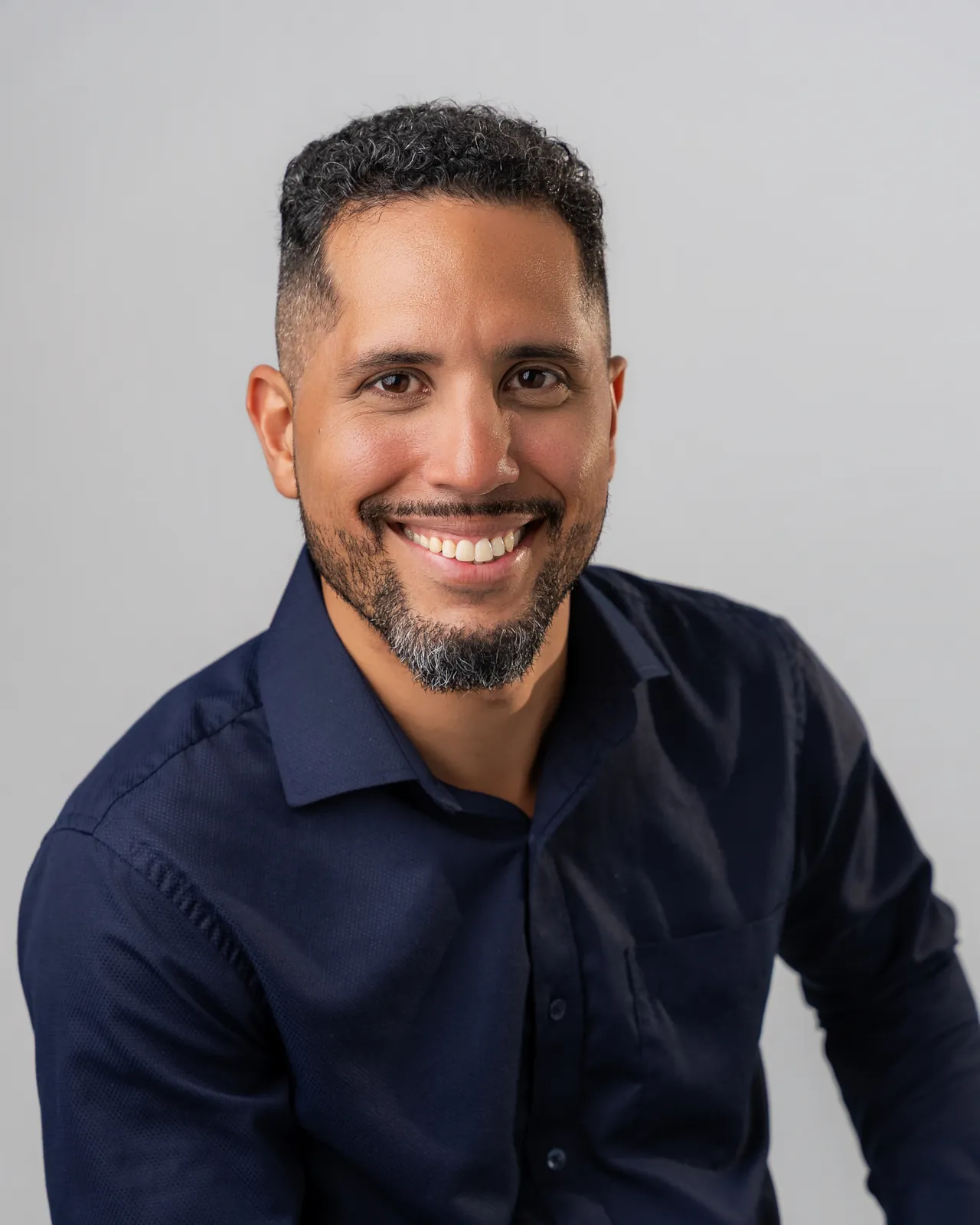
Commercial headshots sell warmth and approachability: the person you would trust in an ad for a bank, a theme park or a family car. Think brighter background, lighter or friendlier colors, and a real smile that reaches the eyes. Energy is open and easy.
Theatrical
Theatrical headshots are for film, TV drama and stage. The expression is quieter and more layered: a closed-mouth look, a hint of a story, more contrast in the light. Darker backgrounds and deeper colors are common. The goal is depth, not mood lighting.
If your agent asks for specific types (cop, nurse, executive), plan those looks before the session so you can change tops quickly between setups.
How many looks do you need?
For most actors starting out, two strong images are enough: one commercial and one theatrical. Add a third or fourth look only if it shows a type you are truly right for. Casting platforms let you upload several photos, but a weak extra photo hurts more than it helps. Quality beats quantity every time.
Framing, light and color
Framing
Most headshots for acting are cropped from about mid-chest up, with the eyes in the upper third of the frame. Submissions now happen mostly online, where your photo appears small, so a crop that is too wide makes the face hard to read. Avoid tilted, "artsy" crops. Keep the camera near eye level.
Natural light or studio light
Both work. Natural light, done well, feels soft and relaxed. Studio light gives full control and the same result every time, no matter the weather. In Orlando, that matters: summer afternoons bring storms and harsh midday sun, which makes outdoor scheduling unpredictable. In our studio, a large 70-inch umbrella on a 600 Ws flash gives soft, wrap-around light that looks natural on skin.
Color
Acting headshots in the US are shot in color. Skin tone should look true to life, not orange, gray or overly warm. If your hair is dark, a lighter background separates you from it; if your hair is light, a darker background does the same.
Retouching: where to stop
This is where many actors get it wrong. Retouching for acting is about removing what is temporary, not changing who you are.
- Fine to remove: a pimple, a stray hair, a lint spot, slight redness, a shirt wrinkle.
- Leave alone: moles, scars, freckles, laugh lines, the shape of your face and body, your eye color.
- Never: heavy skin smoothing that erases texture. It reads as fake at any size.
If a casting director can't find a feature in the room that is obvious in your photo (or the reverse), the photo did its job badly.
Wardrobe for acting headshots
Keep it simple. Solid colors, fitted tops and necklines that frame the face. Pick colors that bring out your eyes, and choose one top that leans commercial (softer, lighter) and one that leans theatrical (deeper, more neutral).
For a full breakdown of colors, fit and grooming, read our guide on what to wear for headshots. Women will find necklines, jewelry, hair and makeup covered in detail in what to wear for headshots as a woman.
How to prepare for your acting headshot session
- Talk to your agent or manager first. Ask which types and looks they want to submit you for.
- Write down two or three roles you could book tomorrow. Those roles decide your wardrobe and expressions.
- Get your haircut about a week before, so it looks settled, not fresh.
- Keep makeup natural. Even out the skin and control shine; avoid anything you wouldn't wear to an audition.
- Bring your tops on hangers, two to four options. Our studio has a garment rack and a steamer.
- Prepare a few thoughts or lines to play with. A specific thought gives the eyes something to do.
- Sleep and hydrate. It shows in the eyes first.
Before the session, pull five headshots of working actors in your type and age range. Bring them. Pointing at a reference is faster and clearer than describing a feeling.
During the session, expect direction. Every session at Nebulart is guided, from the angle of your chin to the thought behind your eyes. With tethering to a monitor, you can see frames as we shoot and adjust in real time. For more pose and expression variations, see our headshot ideas.
Mistakes casting directors notice
- Heavy makeup or a glam look you never wear to auditions.
- Hands near the face. A creative pose for branding, but a distraction in a casting thumbnail.
- Busy backgrounds or props that compete with your eyes.
- Costume pieces. Suggest a type with a top or a jacket, not with a uniform or a hat.
- A photo from five years and two haircuts ago. It wastes everyone's time, including yours.
Acting headshots in Orlando
Orlando's acting market is its own animal. Theme parks hire performers, hosts and characters year round. The convention economy around International Drive and the Orange County Convention Center needs presenters, brand ambassadors and on-camera talent for trade shows. Local theater, commercials and corporate video round it out.
That variety means many Orlando actors need range in one set of photos: a bright, friendly commercial look for park and promo work, and a more grounded theatrical look for stage and screen. Plan both from the start, and you can cover them in one session instead of two.
Orlando weather also argues for a studio session. Between summer humidity, afternoon storms and strong midday sun, outdoor headshots for acting are hard to schedule and hard to keep consistent. In the studio, your light looks the same in July as it does in January, and your makeup stays where you put it.
Our studio sits on Kingspointe Parkway, under 4 miles from the Orange County Convention Center, which makes it an easy stop before or after an audition in the tourist corridor.
When to update your acting headshots
Update whenever your look changes in a way a casting director would notice: a new haircut or color, facial hair added or removed, a visible change in weight, or simply time. Many actors refresh every year or two. If people at auditions say "you look different from your photo," it is time.
Ready for headshots that look like you and get you in the room? See how our headshot sessions in Orlando work, then tell us your types and timeline through the booking form. It sends your request straight to our WhatsApp, and we will reply with a quote.